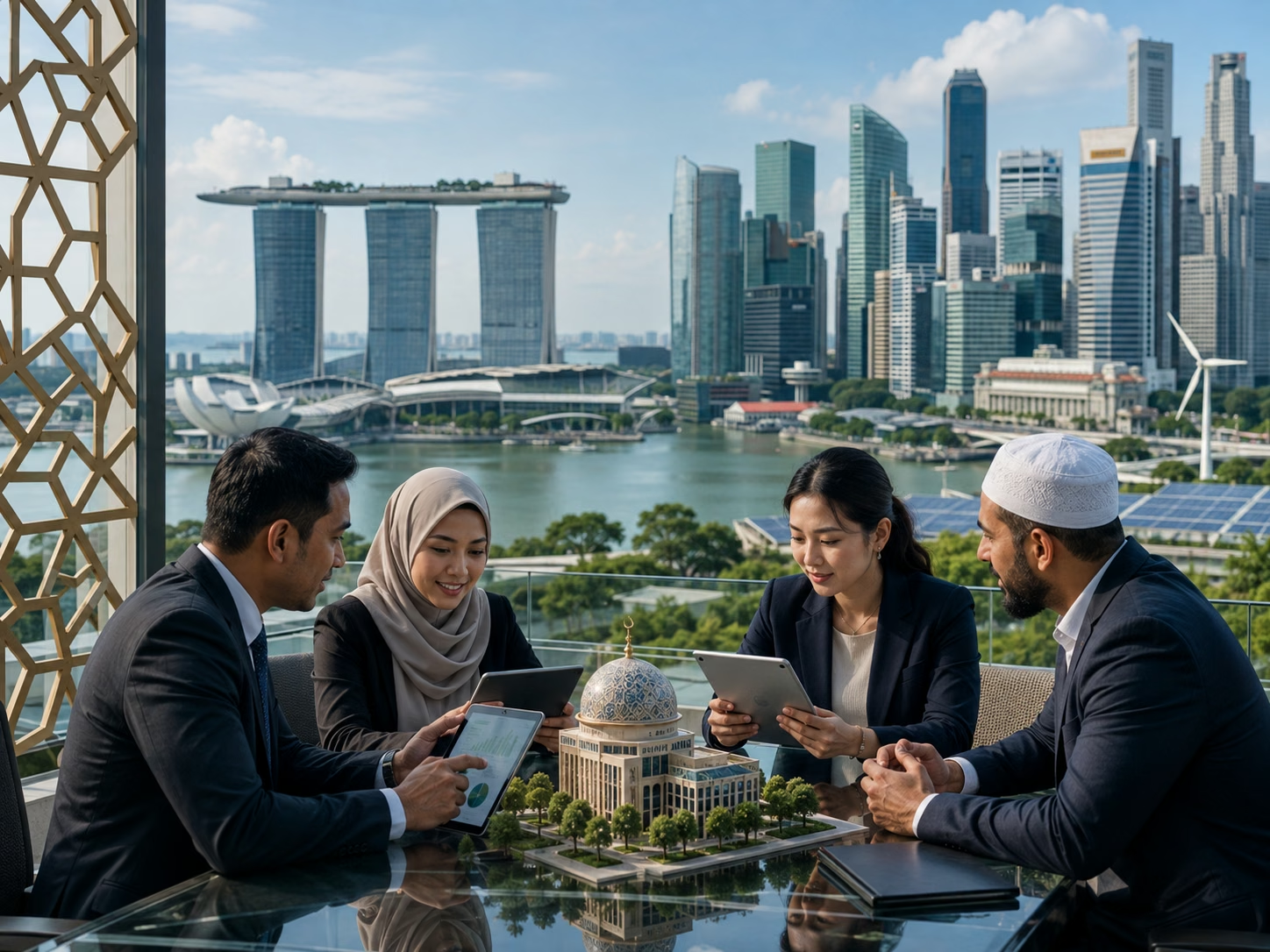
The Singapore Exchange (SGX) is often considered the leader in Southeast Asia, thanks to its world-class infrastructure and a wide array of financial products. Its accessibility, liquidity, and strong regulatory environment make it a leading choice for investors both locally and globally. But how does it compare with the stock markets of its neighboring countries like Malaysia, Thailand, Indonesia, and the Philippines?
One of the most notable advantages of the SGX is its international presence. Many global companies list on the SGX, making it a more diverse exchange with greater access to global capital. The market is also known for its innovative products, including exchange-traded funds (ETFs) and REITs, which attract international investors seeking diversified portfolios.
In contrast, Bursa Malaysia offers a more focused approach, particularly in commodities, energy, and finance. Malaysia’s market is more conservative and sees less fluctuation in market prices compared to Singapore. However, it lacks the global companies that are prominent on the SGX.
The SET in Thailand has a diverse set of companies, particularly in energy, banking, and retail. While it’s seen as a solid market, it is more vulnerable to internal political risks, which can result in market fluctuations. Despite these risks, Thailand’s economic growth continues to be strong, particularly in the tech and e-commerce sectors, creating opportunities for investors.
Indonesia’s IDX has emerged as a market to watch, primarily due to its large consumer market and rapid economic growth. The IDX is growing, but challenges such as political instability and lower liquidity still hold it back from competing with the SGX in terms of investor confidence and global recognition. However, Indonesia’s economic trajectory suggests significant potential for future growth.
The Philippine Stock Exchange (PSE), though relatively small, is growing in importance, driven by the expansion of sectors such as BPO and technology. However, the market still struggles with liquidity and foreign investment, limiting its appeal when compared to Singapore’s more mature and globally connected market.