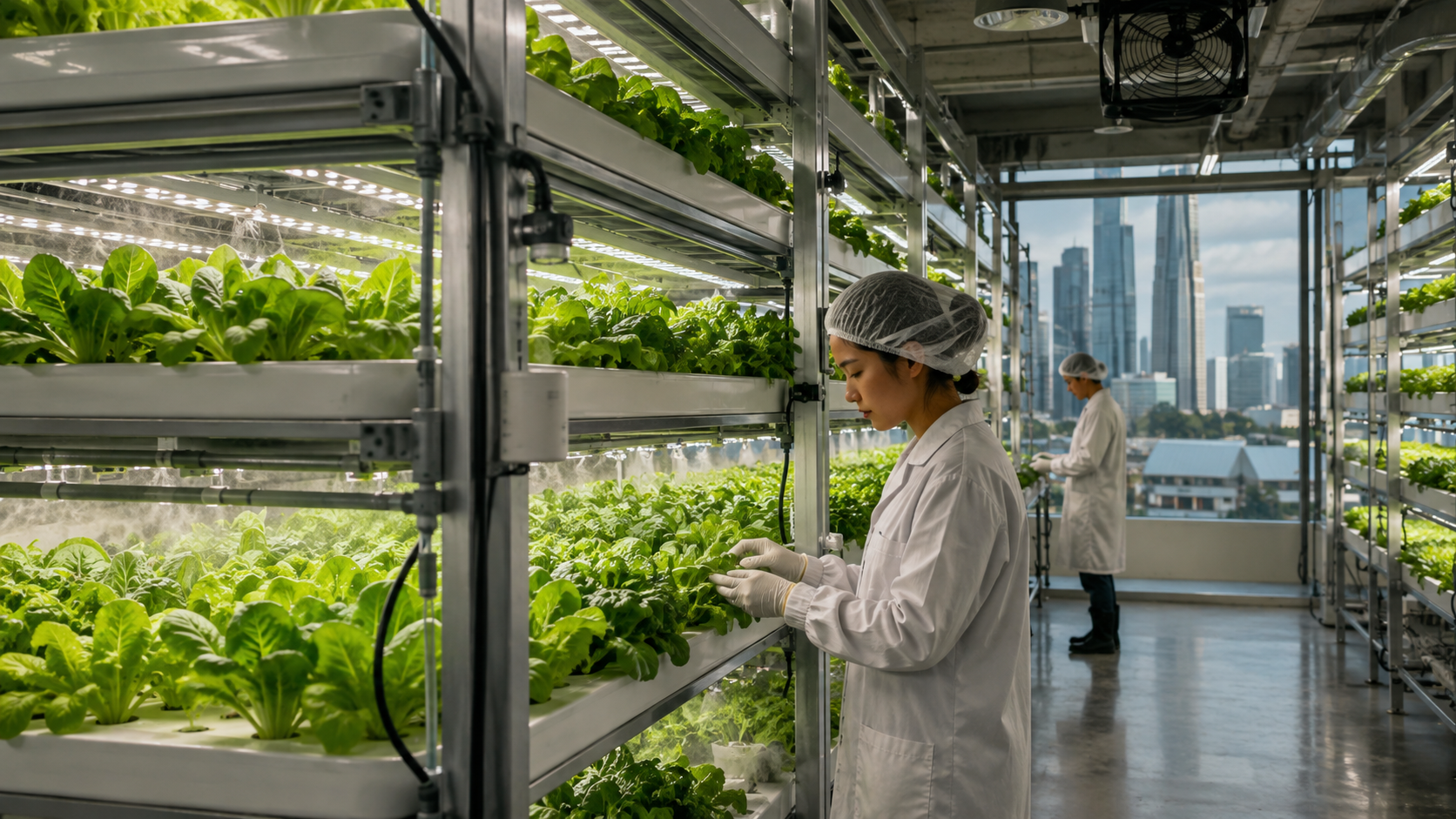
Singapore’s agritech rise is not accidental. It is the result of deliberate policy design, public capital, and international collaboration. The government has built a comprehensive ecosystem that links research institutions, venture capital, and regulatory agencies. The Singapore Food Agency’s Food Security Fund (https://www.sfa.gov.sg/, accessed 2026) provides co-funding for farms to adopt advanced technology and boost productivity. This public support lowers the risk for private investors and helps startups survive the capital-intensive early years.
The Policy Backbone Behind Agritech Growth
Grants and Co-Investment Schemes
Multiple agencies work together to support agritech. The Singapore Food Agency focuses on food safety and local production. Enterprise Singapore helps startups access international markets. The Economic Development Board attracts foreign agritech firms to establish R&D centers. Grant schemes cover everything from test-bedding new technologies to commercial deployment. The Food Security Fund, for example, supports projects that improve climate resilience, reduce waste, or increase yields. This coordinated approach ensures that startups do not face a fragmented bureaucracy.
SEEDS Capital and the Investment Ecosystem
SEEDS Capital, the investment arm of Enterprise Singapore, co-invests with private venture capital in early-stage deep tech startups, including agritech. Temasek and other sovereign-linked investors have also backed alternative protein and vertical farming ventures. This flow of capital has enabled startups to move from concept to pilot production. Investors are drawn by Singapore’s clear regulatory framework, strategic location, and access to Asian markets. The result is a virtuous cycle: funding attracts talent, talent builds companies, and successful companies attract more funding.
Cross-Border Technology Transfer
Singapore has formed partnerships with countries such as the Netherlands, Israel, and China to import and adapt agricultural technology. Dutch expertise in greenhouse horticulture complements Singapore’s strengths in automation and data analytics. Israeli innovations in drip irrigation and crop genetics are being tested in local conditions. These collaborations accelerate learning and reduce the time needed to develop homegrown solutions. Joint research centers and student exchange programs further deepen the knowledge base.
What 2026 Signals for the Next Phase
The focus is shifting from proof-of-concept to commercial viability. Policymakers are now looking at how to scale successful pilots, integrate agritech into urban planning, and export Singapore-developed solutions to other land-scarce cities. Regulatory updates for novel food, renewable energy incentives for vertical farms, and new infrastructure for shared manufacturing are all on the agenda. The 30 by 30 target remains ambitious, but the ecosystem built around it has already produced technologies and companies with relevance far beyond Singapore. That may be the most durable outcome of the policy push.