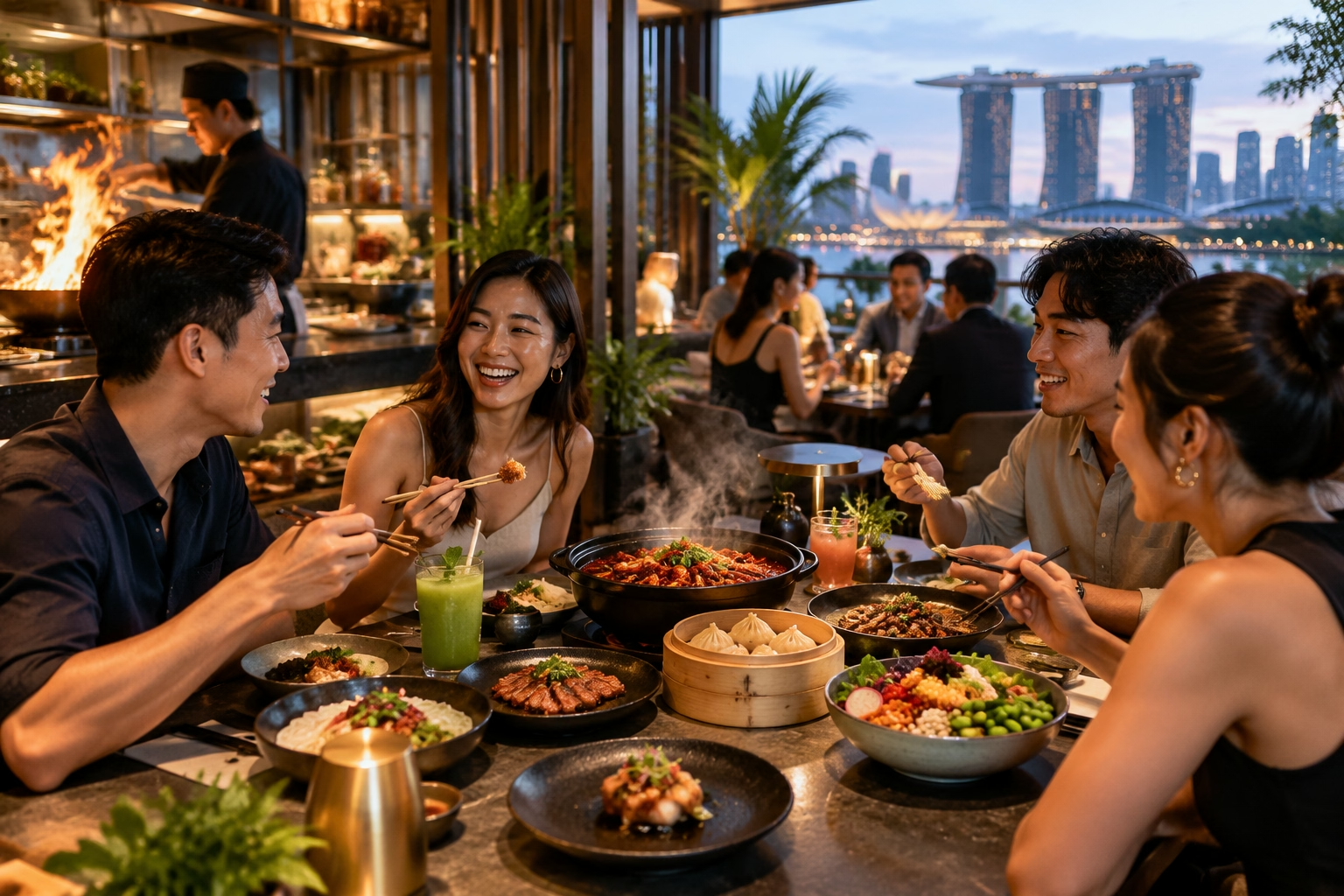
Fine Dining Without the Formality
Singapore’s premium dining segment is undergoing a quiet but decisive transformation. Traditional fine dining — multi-hour tasting menus, rigid dress codes, white tablecloths — is cooling. In its place, “casual luxury” has emerged as the dominant premium format: intimate, high-energy spaces that deliver culinary craft and ingredient quality without the ceremonial distance of classical fine dining.
The evidence is visible in real business decisions. British chef Paul Longworth converted his one-Michelin-starred Rhubarb into Encore by Rhubarb, a casual concept that fills seats at both lunch and dinner. The Straits Times reported in January 2026 that “casual fine-dining and affordable luxury options are gaining popularity,” with upscale meals priced reasonably becoming the new expectation. For entrepreneurs, this signals that the premium consumer still exists — but the format they reward has changed. Accessibility, atmosphere, and storytelling now matter as much as technique.
The Hyper-Regional Chinese Expansion
What began as a post-pandemic influx of mainland Chinese brands has solidified into a structural market shift. Chinese F&B conglomerates have weaponised Singapore as their primary international springboard, driven by saturation in domestic markets. As of August 2025, 85 Chinese F&B brands had opened 405 outlets in Singapore, with more than 40% located in heartland community areas rather than prime commercial districts.
The palate has matured beyond generic mala hotpot. Diners are moving toward Hunanese cuisine — sharp, fresh-chili heat — and the complex, sour, fermented profiles of Guizhou and Yunnan cooking. Micro-regional concepts like Shenyang-style claypot barbecue, Fujian artisanal dining, and Shaanxi hand-pulled noodles are capturing everyday dining traffic. These brands operate differently from traditional restaurants: they function like software networks, relying on highly standardised supply chains and centralised kitchen systems that allow rapid, consistent expansion.
Wellness as Baseline, Not Niche
The wellness shift is no longer a marketing positioning exercise. Menus across Singapore in late 2026 have systematically integrated plant-based iterations of local staples, low-glycemic-index carbohydrate alternatives, and functional beverage pairings. This reflects a consumer base that is health-literate and expects healthier options to be available as defaults, not as special-order requests. The Healthier Dining Programme’s expansion to over 2,600 touchpoints since 2014 confirms that this is a sustained structural change, not a passing trend.
What This Means for Food Entrepreneurs
Three strategic implications emerge. First, premium does not mean formal — operators should design for comfort and energy rather than ceremony. Second, the Chinese cuisine opportunity is in regional specificity, not generic offerings; entrepreneurs who can authentically represent a micro-regional cuisine have a differentiated entry point. Third, wellness must be embedded in menu architecture from the outset, not added as an afterthought.
Singapore’s F&B market in 2026 rewards operators who read consumer behaviour accurately and commit to a clear positioning. The middle ground of generic mid-tier dining is contracting. The edges — casual luxury, hyper-regional authenticity, wellness-integrated menus, and hyper-efficient convenience — are where the growth is.