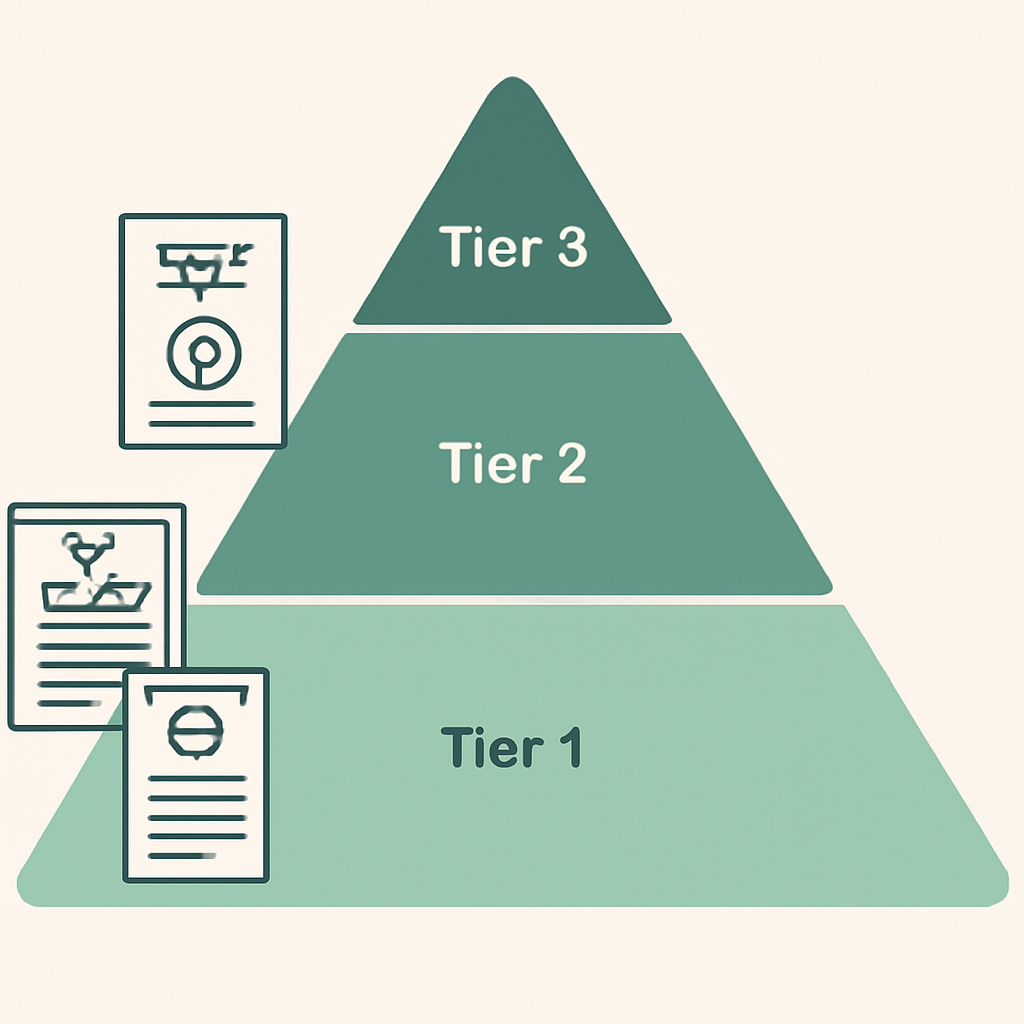
Every bond decision in Singapore comes down to a trade-off: how much certainty you want versus how much yield you need. Government securities—SSBs, SGS, and T-bills—tilt toward certainty. Corporate bonds tilt toward yield. The art is to blend them based on horizon, liquidity needs, and tolerance for drawdowns.
Start with the sovereign curve. When yields are elevated, locking in multi-year SGS can be attractive, particularly if inflation is easing. When the curve is inverted, favor short tenors like T-bills and keep optionality until the cycle normalizes. SSBs provide a safety valve; they can be topped up in high-yield months and redeemed without price risk when better opportunities arise.
Quantify interest rate exposure through modified duration and convexity. A long-dated 20-year SGS has high duration; small yield shifts produce sizable price moves. If your liability horizon is short, that volatility may be unwelcome. A barbell strategy—mix short T-bills with longer SGS—can deliver comparable income with potentially better convexity than a single intermediate bond, benefiting from rate volatility.
On the credit side, spreads compensate for default risk, downgrade risk, and liquidity. For Singapore corporates, watch funding markets and property cycles, as these can drive spread behavior. Assess issuers’ debt maturity ladders; clustered maturities in the next 12–24 months raise refinancing risk, especially if global risk appetite weakens. Prefer issuers with diversified bank lines, ample cash, and conservative payout policies.
Liquidity mechanics matter. Many retail-traded bonds have minimum lot sizes; partial fills and wider spreads can eat into returns. Institutional issues with larger outstanding sizes tend to be more liquid. During stress, selloffs are often indiscriminate—government paper typically rallies or holds, while lower-quality credits gap wider. Structure your allocation so you’re not forced to sell illiquid names at poor levels.
Documentation is not boilerplate. Perpetuals may be callable but not redeemable at par when you want; coupon resets tie future income to benchmark rates; step-ups can be modest relative to market shifts. Subordinated bank capital can be written down or converted under loss-absorption rules. Read the terms and model yield-to-call and yield-to-worst, not just headline coupons.
Taxes and currencies round out the picture. Singapore’s individual tax regime is favorable to fixed income, particularly for sovereign issues. Keeping exposure in SGD simplifies planning and avoids FX drag; if you choose foreign bonds, consider hedging costs.
A disciplined process—define objectives, map duration to horizon, select credits with robust fundamentals, and maintain ample liquidity—keeps the risk/reward balance in your favor. Revisit allocations as the curve shifts and spreads migrate; fixed income rewards patience and periodic re-optimization.