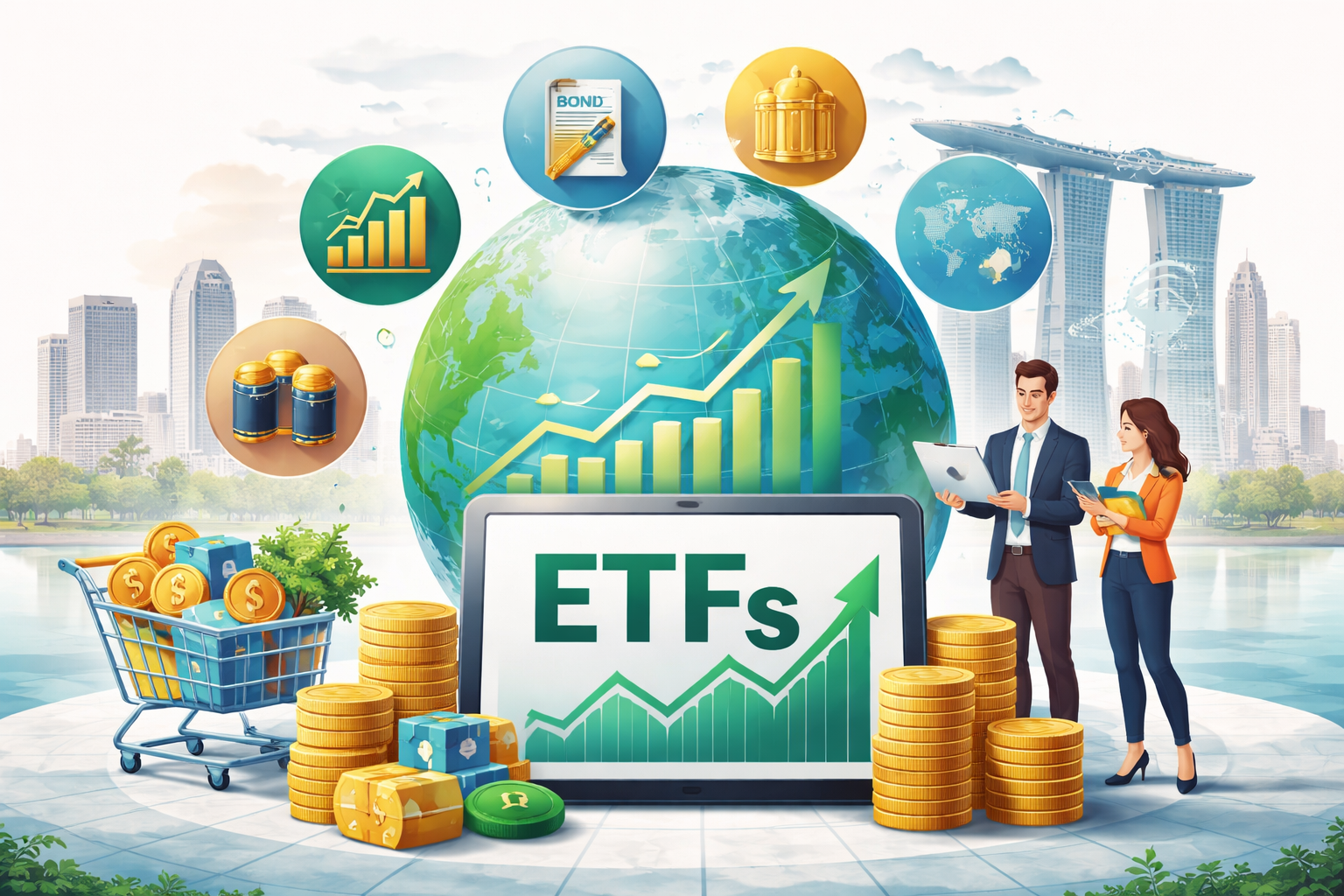
For investors in Singapore, diversification is a key strategy for managing risk and enhancing returns. One of the most efficient ways to achieve diversification is by investing in Exchange-Traded Funds (ETFs), which have become increasingly popular due to their low costs, broad exposure, and ease of trading. ETFs allow investors to gain access to a wide variety of asset classes, making them a powerful tool for building a diversified portfolio.
An ETF is a financial product that pools together a collection of assets, such as stocks, bonds, or commodities. These assets are typically designed to track a particular market index, sector, or investment strategy. By investing in an ETF, individuals can achieve instant diversification, as each share of the ETF represents ownership in a diversified basket of securities. This is particularly beneficial for retail investors who may not have the resources or expertise to pick individual stocks or bonds.
In Singapore, ETFs provide an effective way to gain exposure to the local market. The Nikko AM Singapore STI ETF, for example, tracks the performance of the Straits Times Index (STI), providing investors with exposure to Singapore’s 30 largest companies. This offers a simple and affordable way to invest in the country’s leading firms without needing to buy individual stocks. For those seeking broader exposure, international ETFs such as those tracking the MSCI World Index or S&P 500 offer global diversification, enabling investors to tap into the growth of developed and emerging markets.
One of the main benefits of ETFs is their low cost. ETFs are typically passively managed, meaning they track an index rather than trying to outperform it. As a result, management fees are usually lower compared to actively managed mutual funds. Furthermore, ETFs are traded on exchanges, meaning investors can buy and sell them throughout the day, unlike mutual funds, which are only priced at the end of the trading day.
ETFs are also highly liquid, meaning investors can react quickly to market fluctuations. This is particularly advantageous for investors who want flexibility in adjusting their portfolio. Whether an investor is looking to reallocate assets or capitalize on market opportunities, ETFs allow for efficient trading without the restrictions of traditional mutual funds.
In Singapore, the regulatory environment is supportive of ETFs, and investors benefit from the robust financial infrastructure that the country offers. The Monetary Authority of Singapore (MAS) ensures that ETFs listed on the Singapore Exchange (SGX) are compliant with regulatory standards, providing a level of protection and transparency for investors.
However, as with any investment, there are risks involved with ETFs. Since they track an index, the value of an ETF can decline if the underlying assets perform poorly. Investors should carefully evaluate the risks associated with any ETF, especially if it is focused on specific sectors or regions. Additionally, international ETFs introduce currency risk, as exchange rate fluctuations between the Singapore dollar and foreign currencies can affect the value of the investment.
In summary, ETFs are an excellent tool for Singaporean investors seeking to diversify their portfolios. Their low costs, ease of trading, and ability to provide exposure to a wide range of asset classes make them a valuable option for those looking to build a diversified, balanced portfolio. With the right research and consideration of risk factors, ETFs can help investors achieve their financial goals while managing risk effectively.