For Singapore, entrepreneurship education is more than an academic trend; it is a strategic necessity. With a small domestic market and intense global competition, the country depends on continuous innovation and a vibrant startup scene to sustain its growth. To achieve this, Singapore has developed a comprehensive educational framework that encourages young people to think like entrepreneurs from an early age.
Early-stage education plays a critical role. In primary and secondary schools, students engage in activities that simulate real-life challenges: planning events, running small-scale ventures at school fairs, or working on community-based projects. Teachers encourage them to take initiative, propose solutions, and reflect on what worked and what did not. Concepts such as budgeting, pricing, and customer satisfaction are introduced in a practical, age-appropriate manner. These experiences lay the groundwork for an entrepreneurial mindset centred on initiative and responsibility.
When students enter tertiary institutions, they encounter more structured and intensive entrepreneurship programs. Universities and polytechnics offer courses that delve into opportunity identification, market research, product development, and venture financing. Many programs emphasize technology and innovation, reflecting Singapore’s ambition to be a leading digital and deep-tech hub. Students learn how to use data, design thinking, and agile methods to develop products and services that respond to emerging needs.
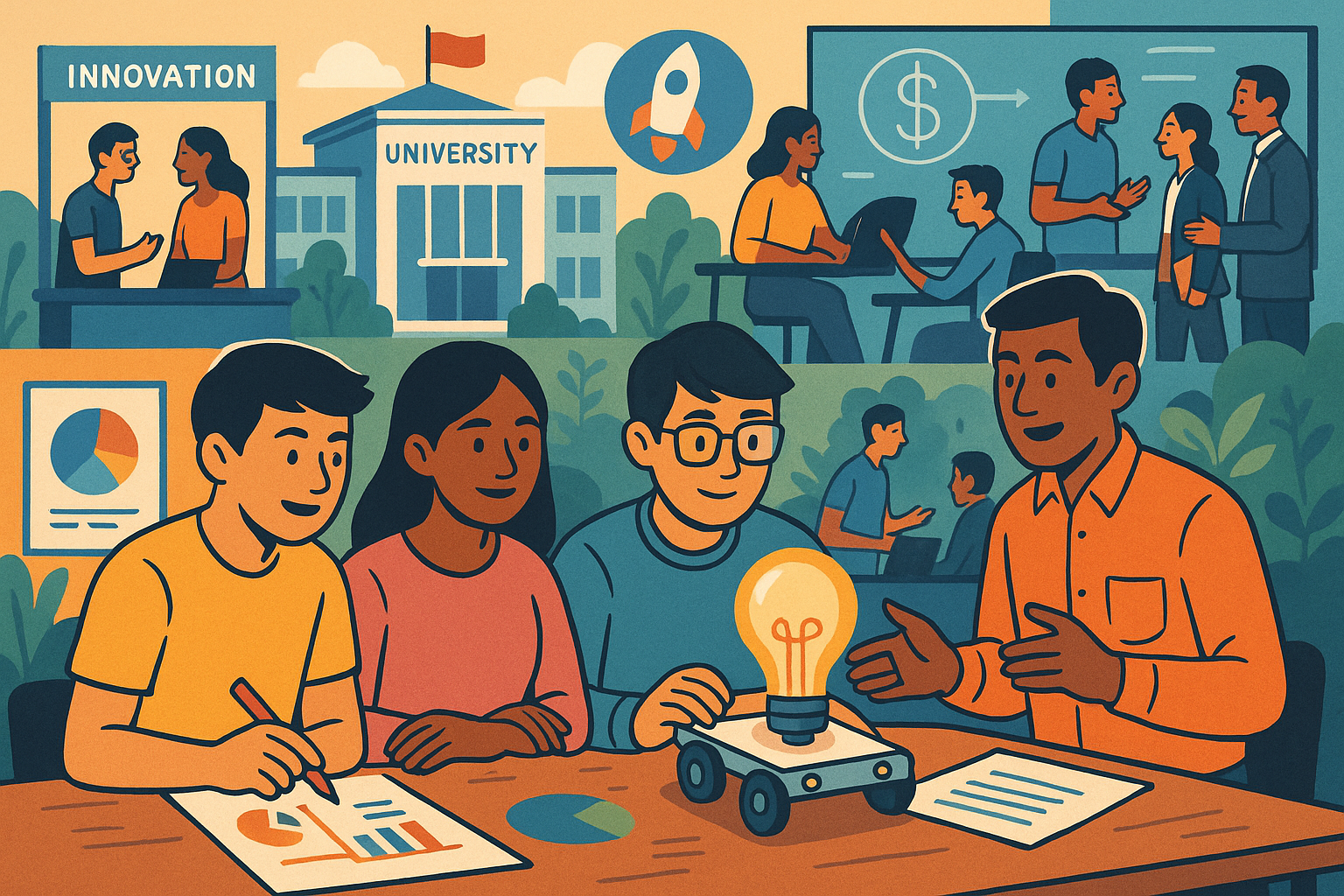
Campus-based startup ecosystems further reinforce learning. Incubators operate as spaces where aspiring entrepreneurs can work on their ideas, receive mentorship, and access networks of investors and industry partners. Regular events like demo days, startup showcases, and innovation festivals give students platforms to present their projects and receive feedback. This active community reduces the isolation that new founders sometimes feel and provides role models who demonstrate that building a startup is achievable.
Singapore’s entrepreneurship education also emphasizes real-world collaboration. Many courses include industry projects where companies present genuine business problems for students to solve. Through these partnerships, learners gain insight into market constraints, customer expectations, and industry dynamics. They also build professional networks that can be valuable when they later decide to launch their own ventures or seek employment in innovative firms.
Government initiatives amplify these educational efforts. Support in the form of seed funding, matching grants, and capability-building programs helps students transition from school-based projects to registered businesses. National innovation strategies encourage the commercialization of research from universities, giving students and researchers opportunities to spin off startups. These policies ensure that promising ideas have pathways to reach the market, not just remain as academic exercises.
Beyond teaching business tools, Singapore’s education system works to cultivate values that sustain ethical entrepreneurship. Students are encouraged to consider social and environmental impacts when designing ventures. Social entrepreneurship, inclusive innovation, and sustainability-focused projects feature prominently in many programs. This value-based approach helps future entrepreneurs understand that long-term success depends on trust, integrity, and responsible practices.
By integrating entrepreneurial learning into curricula, campus life, and national policy, Singapore systematically develops a pool of young people ready to lead change. Whether they start companies, join startups, or drive innovation within established organizations, these graduates contribute to a dynamic and resilient economy that can adapt to future uncertainties.