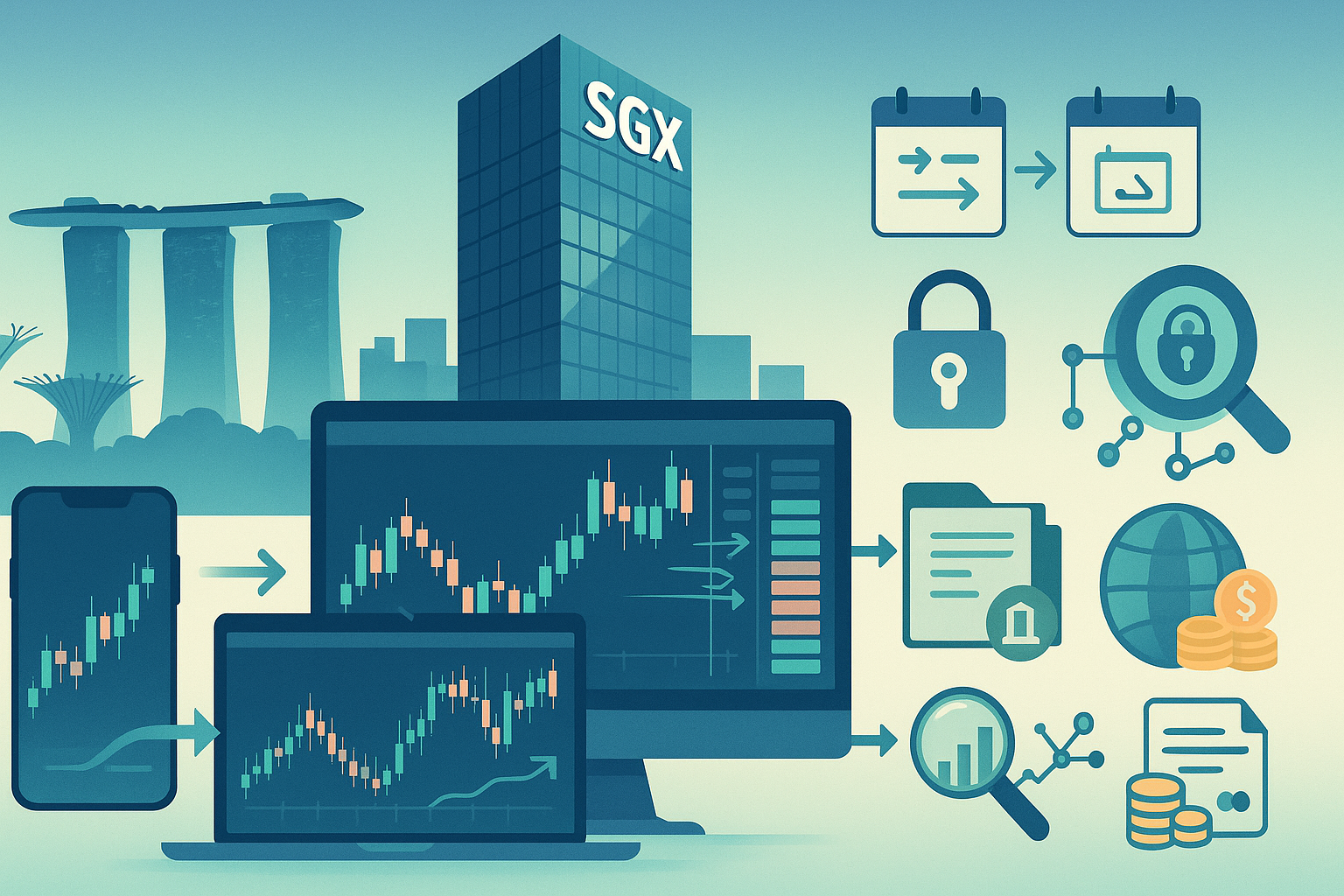
Selecting a trading platform in Singapore is less about brand names and more about aligning the toolset with your workflow. The market’s backbone is SGX, where local blue chips, REITs, and ETFs trade under MAS oversight. What you experience daily—screeners, charts, order tickets—comes from the broker’s software and its integrations with data, risk, and settlement systems.
Start with how you’ll hold shares. Direct CDP holdings record Singapore-listed stocks under your name, aiding transfers between brokers and providing clarity for entitlements. Custodian structures keep shares with the broker, often lowering explicit commissions and enabling cross-venue portfolios in one account. Be mindful of how each model treats corporate actions, proxy voting, and transfer fees.
Feature sets vary in meaningful ways. Some platforms emphasize depth-of-market, time-and-sales, and ladder trading for active participants. Others foreground long-term investing: robust fundamentals pages, dividend schedules, and model portfolios. Global brokers like IBKR and Saxo offer multi-asset reach—equities, options, futures—with portfolio margin and powerful risk dashboards. Mobile-first entrants such as Tiger Brokers and Moomoo compete with slick UIs, social elements, and low minimums.
Execution and orders deserve scrutiny. Beyond standard limit and market orders, look for stop-limit, trailing stops, and bracket orders that tie entry with profit-taking and stop-loss levels. Time-in-force options (day, GTD, IOC/FOK) help tailor fills, especially in thinner counters. Some desks expose execution algos—TWAP, VWAP, percentage-of-volume—to reduce market impact on larger tickets. While retail access to bespoke algos may be limited, order-slicing and conditional triggers are increasingly common.
Research and data quality can be decisive. A good platform integrates SGXNet announcements, earnings calendars, and analyst coverage, and offers screeners that combine liquidity metrics with valuation and quality signals. Depth subscriptions provide visibility into multiple price levels; add-on market data can feel costly, but active traders often recover the expense through improved entries and exits.
Technology and safety are non-negotiable. Expect 2FA, encryption, and secure session handling. MAS technology risk management standards push brokers to invest in monitoring, DDoS protection, and disaster recovery. E-KYC via MyInfo speeds onboarding while satisfying AML/CFT requirements. Reliability during peak events—IPO listings, index rebalances, macro shocks—separates solid platforms from the rest.
Costs go beyond headline commissions. Factor in exchange/clearing fees, platform or custody charges, inactivity penalties, FX conversion spreads for overseas trades, and GST where applicable. Singapore typically does not tax capital gains for individual investors; nonetheless, the pattern and intent of trading can matter, so specialized advice is prudent if you trade frequently or with leverage.
Consider special programs. Some platforms integrate with CPF Investment Scheme or SRS for eligible instruments, allowing long-term investors to deploy specific savings. Education centers—webinars, demo accounts, strategy articles—can accelerate your learning curve. Finally, test-drive two or three platforms with paper trading and small live orders. Prioritize uptime, transparent order handling, and support responsiveness over gimmicks. The right platform is the one that makes it easy to act on your thesis and hard to make avoidable mistakes.