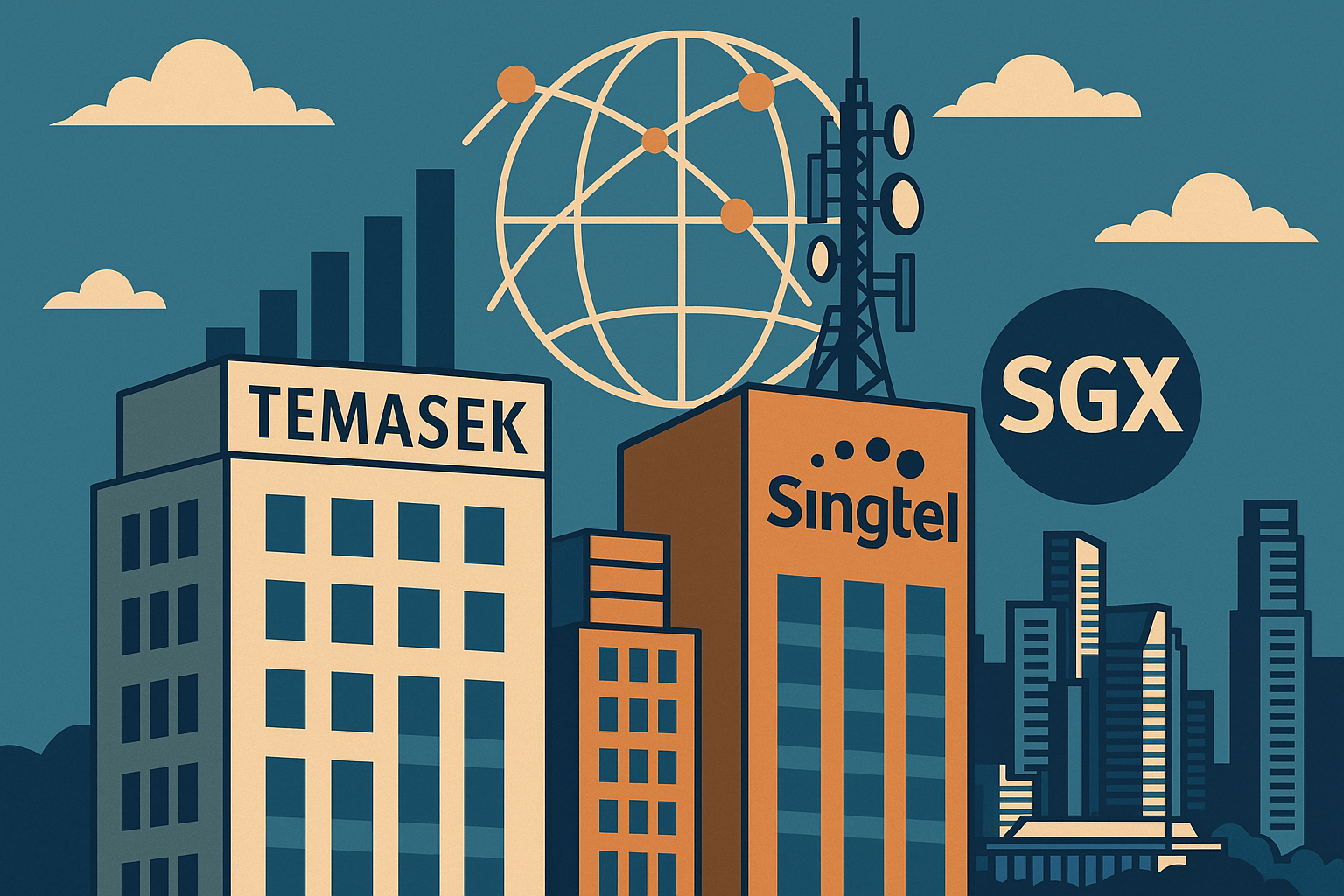
To appreciate the strategic significance of Singtel in Singapore’s stock market, it helps to see it as part of a broader story orchestrated by Temasek. Temasek’s investment philosophy supports the emergence of regional champions headquartered in Singapore, and Singtel is one of the earliest and most prominent examples of this approach.
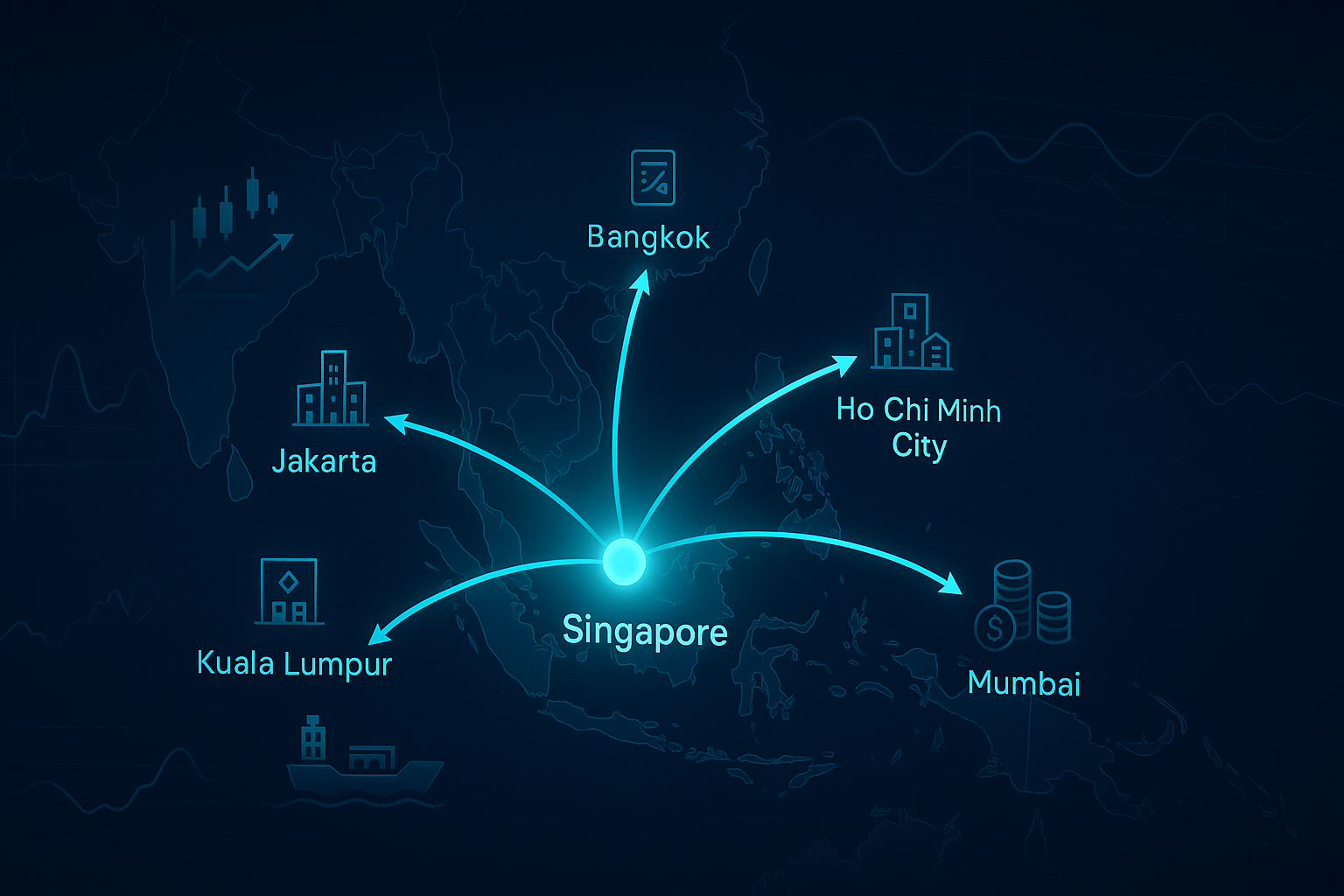
Originally a domestic telecom provider, Singtel was encouraged and supported to look beyond Singapore’s borders as the local market matured. With Temasek as a long-term shareholder, Singtel pursued stakes in operators in India, Indonesia, Thailand, the Philippines, and Australia, building an extensive network of associates and subsidiaries. This strategy allowed Singtel to participate in high-growth emerging markets, capturing subscriber growth and rising data consumption that would have been impossible within Singapore alone.
The regionalization of Singtel has had a tangible impact on its financial profile. A significant portion of earnings now comes from outside Singapore, often through equity-accounted contributions from associates. This diversifies revenue streams but also introduces complexity: investors must monitor multiple regulatory regimes, currency exposures, and competitive landscapes. Singtel’s share price can be influenced by developments in foreign markets where it does not have full control, such as pricing pressure in India or spectrum auctions in Indonesia.
Temasek’s role has been to provide stability and patient capital for these long-term bets. Telecom expansion is capital intensive and sometimes politically sensitive; having a state-linked investor with a strong balance sheet and a long horizon can help reassure lenders, regulators, and partners. At the same time, Temasek typically avoids micromanaging operations, leaving day-to-day execution to Singtel’s management while focusing on strategic direction and overall portfolio fit.
In parallel with regional expansion, Singtel has embarked on a digital transformation journey. Recognizing that voice and SMS revenues were in structural decline, the company has invested heavily in data networks, 5G infrastructure, and enterprise digital services. It has developed capabilities in cloud, cybersecurity, managed services, and digital platforms aimed at governments and corporate clients. These higher-value services help offset competitive pressure in consumer mobile and create new revenue pools in a world where connectivity is commoditized.
Another important trend is Singtel’s move into digital infrastructure assets such as data centers. As data traffic and cloud adoption accelerate, the physical infrastructure underpinning digital economies becomes valuable. Singtel has explored partnerships, partial monetization, and strategic investors for some of these assets, aiming to crystallize value and recycle capital into growth projects while still maintaining operational influence.
For SGX investors, this combination of regional telecom exposure and digital infrastructure makes Singtel a hybrid investment. It offers defensive elements—recurring revenue from connectivity and a history of dividends—alongside growth potential tied to data usage, cloud services, and regional economic development. The trade-off is complexity and the need for ongoing capital expenditure.
Temasek’s ongoing support suggests that both entities see value in Singtel’s evolution from a traditional operator into an integrated digital and infrastructure player. Investors analyzing the Singapore market should therefore read Singtel’s strategy not only as a corporate narrative but also as part of a broader national effort to position Singapore as a hub for regional connectivity and digital services. This perspective helps explain why Singtel’s strategic moves and financial performance attract such close attention from analysts, policymakers, and market participants alike.