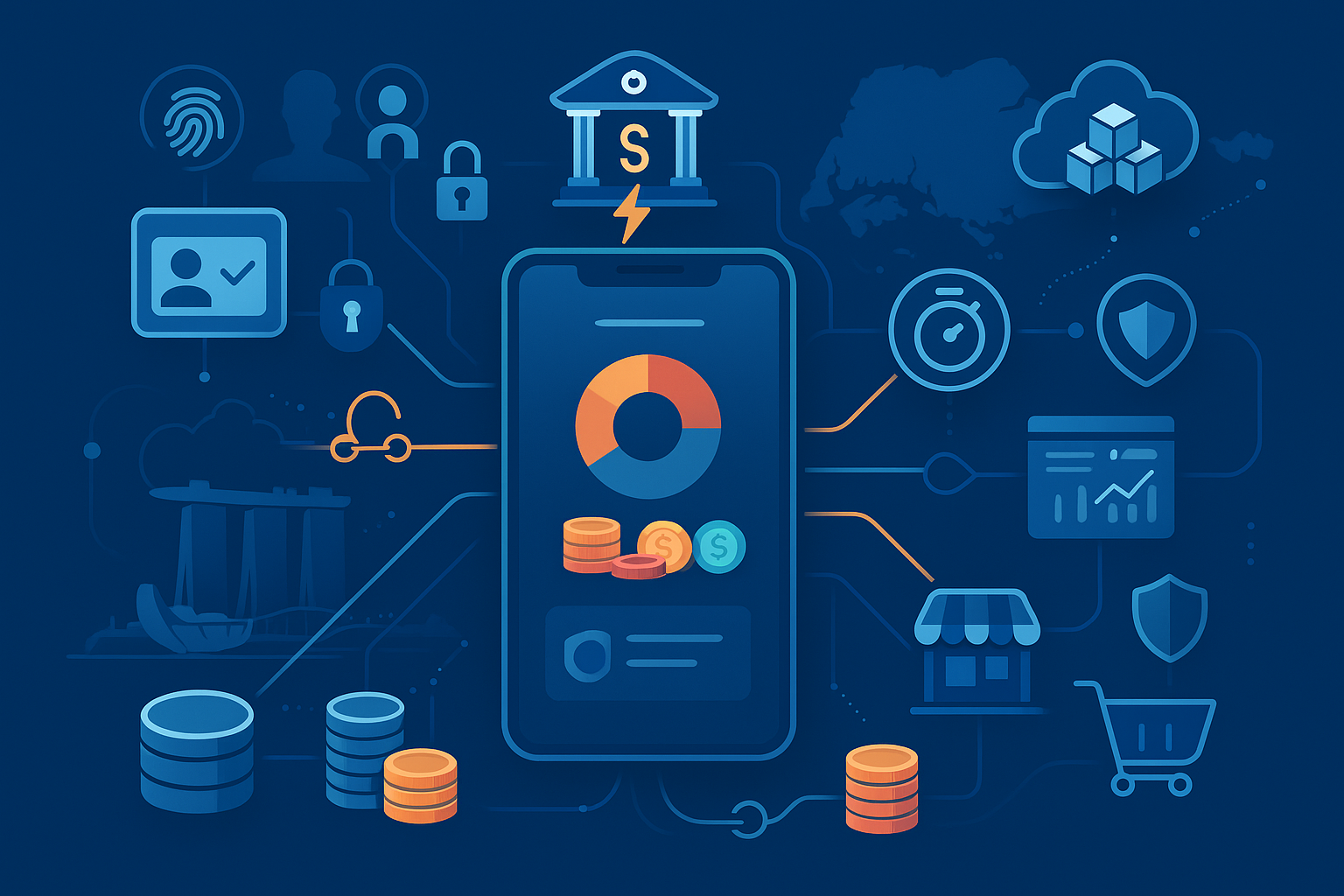
The classic branch-centric model struggled against a city where almost everyone carries a high-powered computer in their pocket. Singapore solved the last-mile issues by knitting identity, payments, and data-sharing into a coherent system. Singpass/Myinfo verifies people securely, FAST and PayNow settle funds instantly, and SGFinDex enables aggregated financial views under explicit consent. MAS set the lane markings with licensing regimes and technology risk guidance, clearing the way for banks with no physical counters.
Onboarding is a guided, app-native flow: scan IDs, perform liveness checks, confirm pre-filled data, and you’re banking within minutes. The same app manages savings vaults, recurring payments, salary crediting, and multi-currency travel cards. For small businesses, digital banks package invoicing, collections via PayNow QR, and quick access to working capital using transaction data rather than stacks of PDFs.
Security starts with the device and extends to behavior. Banks bind accounts to trusted devices, monitor app integrity, and detect anomalies like unusual payee creation or time-of-day spikes. Risky actions invoke step-up authentication, and customers can trigger an emergency freeze if they suspect a compromise. Scam defenses now include cooling-off windows and tighter controls around SMS and notification channels.
Behind the scenes, a product-led operating model reigns. Cross-functional squads ship iteratively, supported by automated testing and blue/green deployments. Data pipelines feed both AML/CFT monitoring and customer insights, ensuring compliance and personalization draw from the same truth. Model risk frameworks keep machine learning in check, with human-in-the-loop reviews where stakes are high.
Ecosystem connectivity drives distribution. Open APIs allow banks to seat themselves inside marketplaces, accounting suites, and logistics platforms, triggering financial services at the moment of need. Embedded credit can fund inventory, while embedded insurance can cover shipments, all without redirecting users to a separate portal.
Competition is a catalyst. Incumbents have reimagined mobile apps and automated back offices to cut processing times and errors. New digital banks press on gaps—gig worker income smoothing, micro-merchant settlement, low-friction international transfers—forcing everyone to simplify pricing and reduce latency.
The regional orientation matters. Multi-currency balances, virtual cards, and cross-border RTP links are practical responses to a city that trades constantly with its neighbors. MAS experimentation with purpose-bound money hints at programmable disbursements that unlock only for defined uses, automating compliance and reconciliation.
Physical desks will persist for nuanced advice, but the gravitational pull is to screens and APIs. In Singapore’s office-less phase, winners will be those who blend uncompromising security with invisible friction, delivering financial tools that feel as natural as messaging—powerful when needed, and out of the way when not.