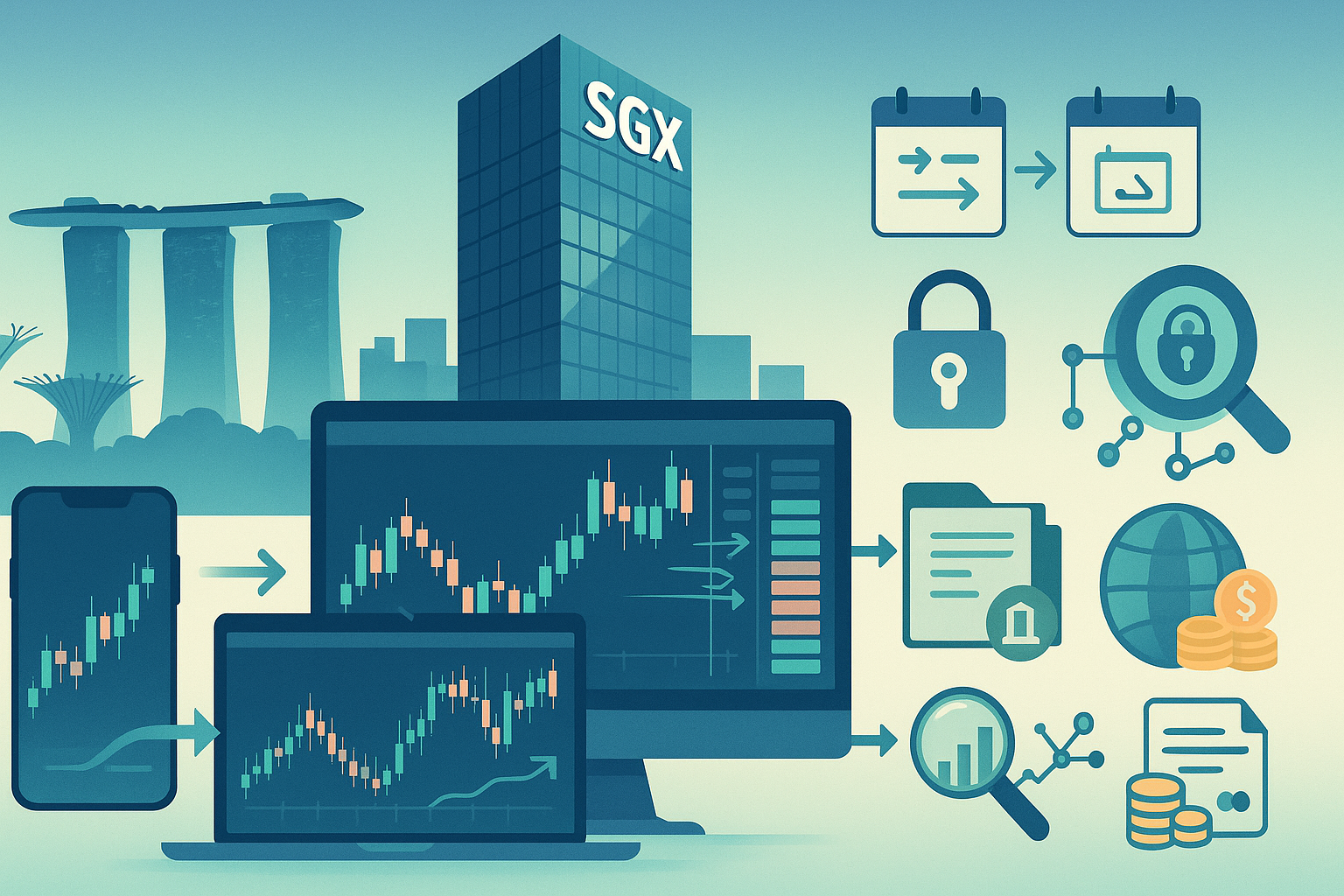
Singapore’s stock market often reacts strongly to global economic crises because the country is deeply integrated with the world economy. Unlike larger economies with huge domestic markets, Singapore relies heavily on international trade, finance, shipping, tourism, and investment services. This openness makes the country highly competitive during periods of global growth, but it also means that external shocks can quickly affect local market performance.
A global economic crisis usually reduces confidence among investors. When uncertainty rises, many investors prefer to protect capital rather than seek higher returns. They may sell stocks, hold cash, or buy safer assets. This shift can cause share prices on the Singapore Exchange to decline. The Straits Times Index, which includes leading companies in banking, real estate, telecommunications, and industrial sectors, often reflects this change in sentiment.
Trade exposure is one of the biggest reasons Singapore equities are affected. Many companies listed in Singapore depend on demand from overseas customers or regional markets. If global consumption falls, supply chains slow, and business investment weakens, revenue expectations for these companies may decline. Firms connected to manufacturing, electronics, transport, energy, and logistics can be especially vulnerable. Because stock prices are based partly on expected future earnings, weaker growth forecasts can quickly translate into lower valuations.
The financial sector is another major link between global crises and the Singapore stock market. Singapore is a leading banking and wealth management center in Asia. Its major banks are closely watched by both local and foreign investors. During a crisis, concerns may rise over loan quality, business activity, and investment income. Even if actual losses remain controlled, fear of financial stress can reduce investor appetite for bank shares. Since banks carry a large weight in the local index, their movement can strongly influence the broader market.
Real estate and REITs also face pressure during global downturns. Singapore REITs often own assets such as office buildings, shopping malls, logistics facilities, hotels, and industrial properties. A crisis can reduce rental demand, lower hotel occupancy, weaken retail traffic, or delay business expansion. If interest rates rise at the same time, REITs may also face higher borrowing costs. This combination can affect dividend expectations, making investors more cautious.
Another important factor is foreign investor behavior. Singapore’s market is open, transparent, and liquid, which attracts international funds. However, during global stress, these funds may withdraw from equities across Asia. This can create selling pressure that is not always linked to local economic conditions. In other words, Singapore stocks can fall because of worldwide portfolio adjustments, even when domestic policies and institutions remain strong.
Government and regulatory strength help reduce the long-term damage. Singapore has a reputation for stable governance, strong financial supervision, and careful fiscal planning. These qualities can reassure investors during difficult periods. Support measures for businesses, workers, and households can also limit the depth of economic weakness. As uncertainty fades, investors often return to markets with reliable institutions and strong balance sheets.
For long-term investors, global crises require patience and discipline. Panic selling can create losses, while careful analysis may reveal undervalued companies with solid fundamentals. Blue-chip stocks, strong banks, defensive businesses, and well-managed REITs may become attractive after excessive market declines. Singapore’s stock market is not immune to global shocks, but its structure, regulation, and regional importance give it the ability to recover when international conditions stabilize.