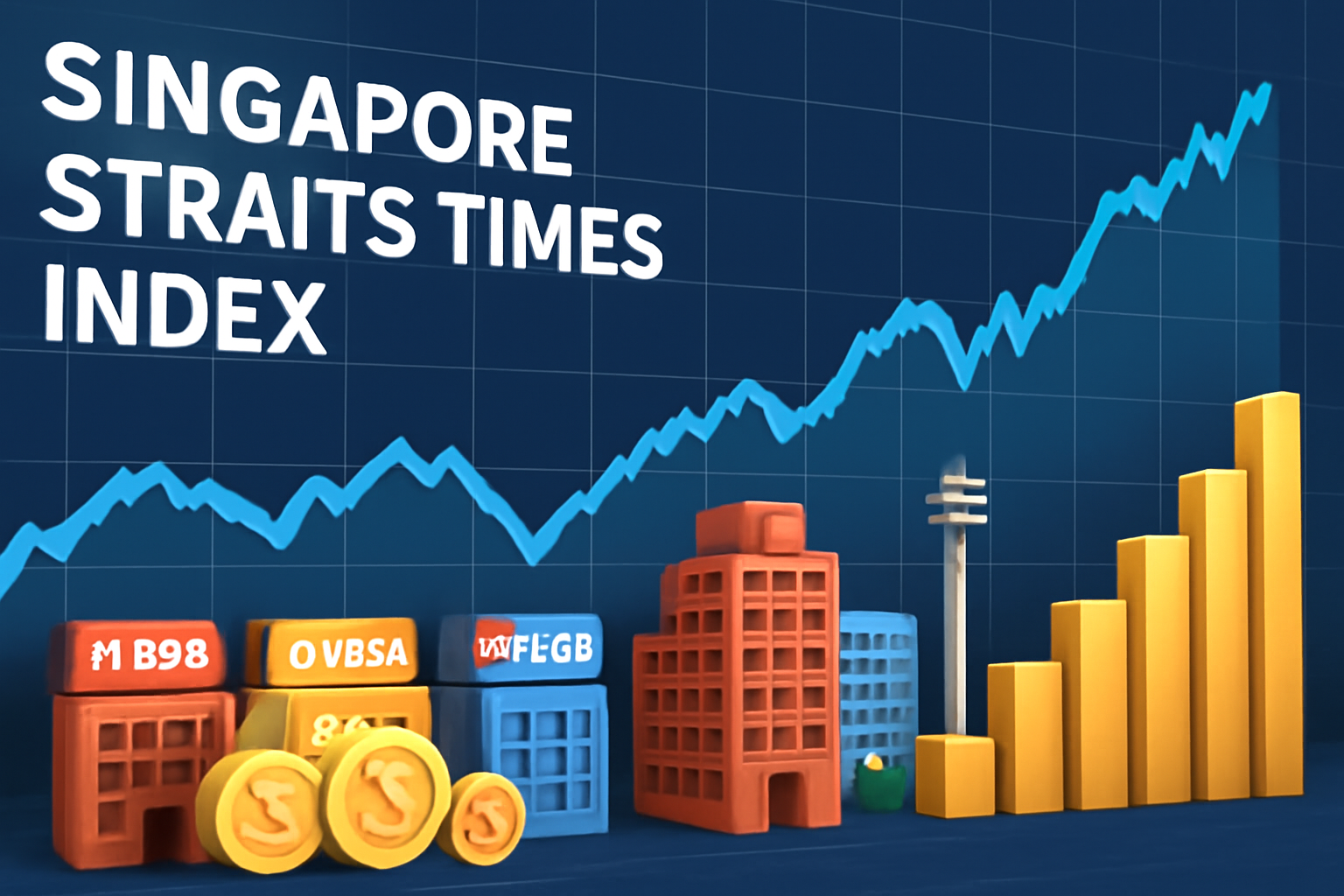
The Straits Times Index (STI) stands as one of Singapore’s most important stock indices, reflecting the performance of the top 30 companies on the Singapore Exchange (SGX). It provides investors with a snapshot of the nation’s economic vitality, serving as a crucial benchmark for market movements. The STI comprises companies across various sectors, including financials, real estate, and telecommunications, ensuring a diverse and comprehensive view of the Singaporean market.
Analyzing the STI’s Recent Performance
In recent years, the STI has been a reflection of both the strengths and vulnerabilities of Singapore’s economy. The index has been notably responsive to global economic events, such as shifts in U.S. monetary policy, geopolitical uncertainties, and the COVID-19 pandemic. These external factors often cause volatility, but Singapore’s stable financial system, strong regulatory framework, and strategic economic policies have helped the STI recover from market downturns.
During 2023, the STI posted mixed results. While global inflationary pressures and rising interest rates weighed on market sentiment, certain sectors like banking and real estate continued to show positive growth. The banking sector, in particular, benefitted from higher interest rates, which boosted profit margins for banks like DBS and OCBC. On the other hand, real estate stocks, led by CapitaLand and City Developments, showed resilience, supported by sustained demand in Singapore’s property market.
Sector-wise Contribution to the STI
The financial sector is the cornerstone of the STI. Major banks such as DBS, OCBC, and UOB are not only the largest constituents but also the key drivers of the index. These banks’ solid financial health and diversified business operations have allowed them to weather various global crises and continue to generate substantial earnings, making them essential to the STI’s overall performance.
The real estate sector, with players like CapitaLand and City Developments, also plays a significant role in driving the STI’s performance. The real estate market in Singapore remains robust, with continued demand for both residential and commercial properties. However, changes in government policy or interest rates could have a considerable impact on this sector, which makes it an important area for investors to monitor.
Telecommunications, represented by companies such as Singtel, also hold a substantial weight in the STI. As digital transformation continues to reshape industries worldwide, Singtel’s expansion into digital services and 5G technology has positioned it as a crucial player in the index, offering growth potential beyond traditional telecom services.
Looking Ahead: What to Expect for the STI
The future performance of the STI will depend on several key factors, both local and global. Domestically, Singapore’s stable economy, business-friendly policies, and strategic position as a financial hub in Asia should provide solid support for the stock market. Continued focus on infrastructure development, innovation, and sustainable practices will likely provide further opportunities for growth, particularly in emerging sectors such as green energy and technology.
Internationally, however, there are risks that could weigh on the STI’s performance. Rising global interest rates, inflation concerns, and geopolitical tensions may lead to increased market volatility. Additionally, the possibility of global economic slowdowns or disruptions in global trade could have far-reaching effects on Singapore’s export-driven economy.
That being said, there are opportunities for growth within the STI, particularly as sectors like healthcare, technology, and green energy continue to gain momentum. Companies that innovate and adapt to these emerging trends are expected to drive the future performance of the STI, providing investors with opportunities for substantial returns.
As the market faces both challenges and opportunities, the STI remains a key indicator of Singapore’s economic health, offering valuable insights into the future trajectory of the country’s financial landscape.