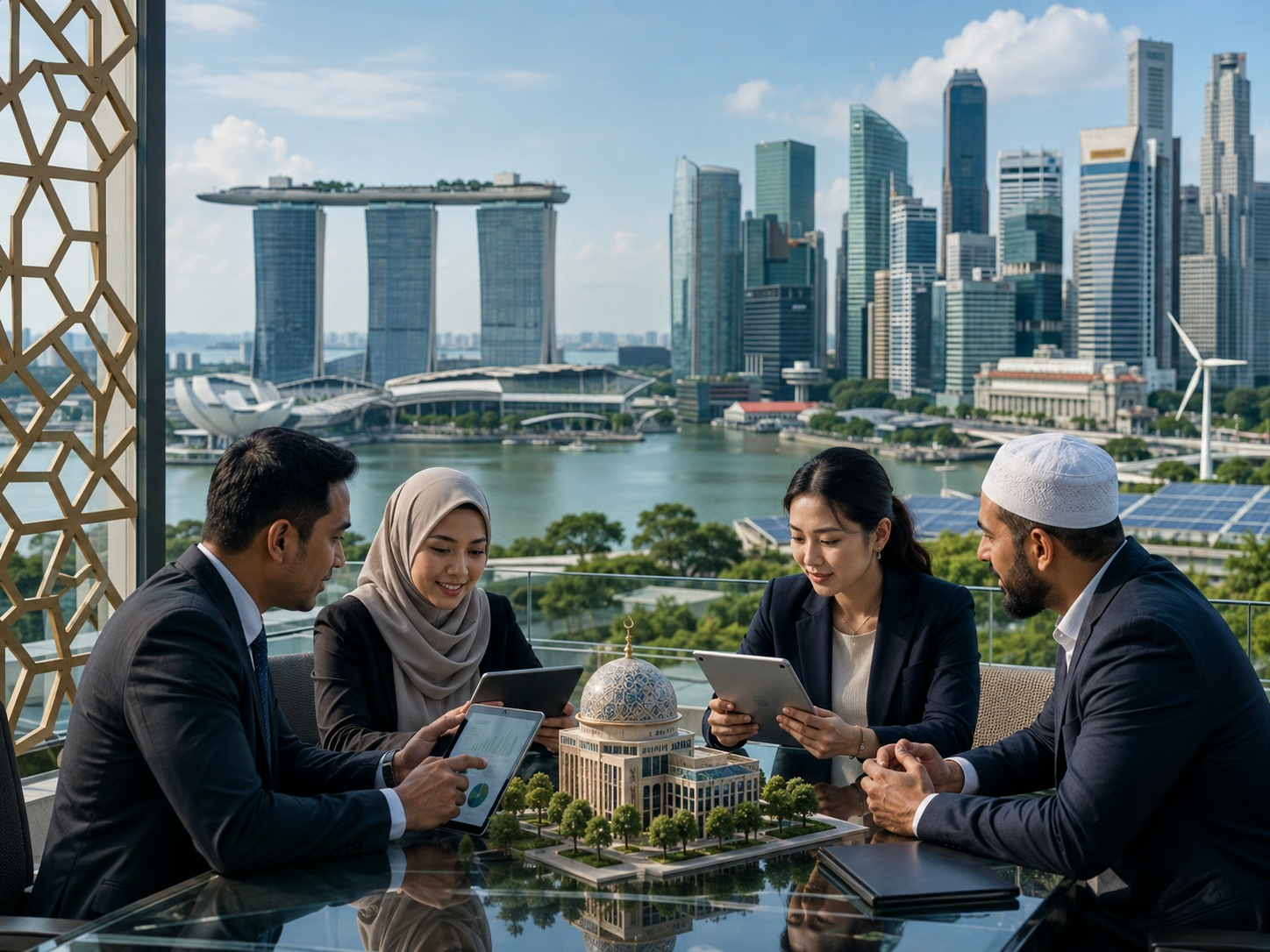
The global Halal economy is not a monolith; it is a network of distinct regional markets with different risk profiles and growth rates. The wealthy, capital-rich nations of the Middle East seek diversification and yield, while the dynamic, populous nations of Southeast Asia seek infrastructure and growth capital. Bridging this gap requires a neutral, trusted intermediary with a robust legal system—a role Singapore fulfills with precision. The city-state has become the Switzerland of the Islamic finance world, a safe harbor where Gulf capital meets ASEAN opportunity.
The Magnet for Sovereign Wealth Funds
Middle Eastern Sovereign Wealth Funds (SWFs), such as those from Abu Dhabi, Saudi Arabia, and Kuwait, have significantly increased their presence in Singapore. These funds are not merely looking for short-term trades; they are establishing permanent offices and forging joint ventures with Singaporean asset managers. Their goal is to deploy capital into the “ASEAN growth story”—logistics, ports, data centers, and renewable energy. By partnering with Singaporean entities, these funds gain access to on-the-ground expertise, political risk management, and a reliable legal framework for dispute resolution, all while ensuring the investments are structured to be Shariah-compliant.
The Halal Food and Lifestyle Economy
While often overlooked in financial analysis, the Halal consumer market is a massive driver of investment. Singapore has positioned itself as a global hub for Halal food certification and logistics. This has attracted private equity investment into Singapore-based companies that export Halal certified goods to the world. For an investor, this represents a unique angle: investing in the “picks and shovels” of the Halal economy. Companies involved in cold chain logistics for Halal meat, or biotech firms developing halal vaccines and pharmaceuticals, are raising capital through Islamic instruments in Singapore to fund their global expansion.
The Geopolitical Safe Harbor
In a world fraught with geopolitical tension, the neutrality of Singapore is a competitive advantage. Investors from the Middle East looking to enter markets like Vietnam or the Philippines may face regulatory hurdles or political risks. By routing investments through a Singapore-based Special Purpose Vehicle (SPV) or Shariah-compliant fund, these risks are mitigated. The extensive network of Double Taxation Agreements (DTAs) and investment treaties that Singapore has signed with ASEAN nations ensures that returns are maximized.
Recent reports from the Singapore Economic Development Board (EDB) highlight a surge in Middle Eastern family offices setting up in Singapore, citing not just the financial infrastructure but the high quality of life, education, and safety. This demographic shift brings with it a wave of new capital seeking Shariah-compliant private equity and venture capital opportunities in the region’s booming tech startups, further cementing Singapore’s role as the definitive bridge between two of the world’s most dynamic Islamic economic zones.