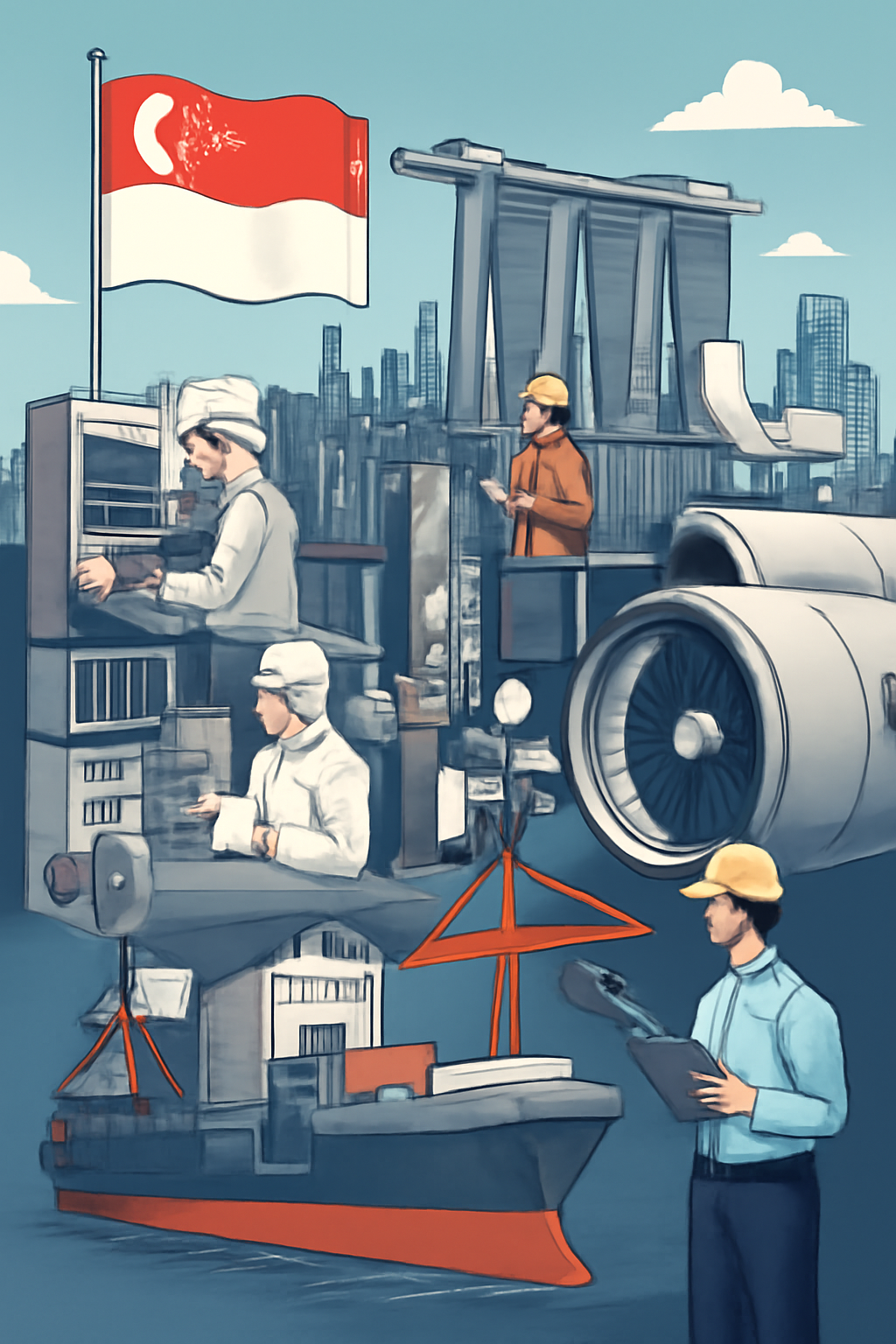
The manufacturing sector in Singapore is a major contributor to the nation’s prosperity, driving economic growth and ensuring that the country remains a competitive player in the global economy. With a diverse set of industries, including electronics, chemicals, biomedical sciences, precision engineering, and transport engineering, Singapore’s manufacturing sector plays a pivotal role in shaping the country’s economy.
One of the standout sectors is electronics. Singapore is a global leader in semiconductor manufacturing, with major players like Intel, Micron, and GlobalFoundries operating in the country. These companies produce critical components used in various high-tech devices, such as smartphones, computers, and industrial machinery. Singapore’s robust infrastructure, technological expertise, and skilled workforce have enabled the country to dominate the electronics industry and become a crucial part of the global supply chain.
Chemicals manufacturing is another cornerstone of Singapore’s economy. The country is one of the world’s top producers of petrochemicals and chemicals, with multinational corporations such as Shell, ExxonMobil, and BASF having large-scale operations in Singapore. These companies produce chemicals used in everything from automotive and construction materials to agricultural products and medical devices. Singapore’s strategic location in Southeast Asia, combined with its state-of-the-art infrastructure, makes it an attractive destination for chemical manufacturing.
The biomedical sciences sector is also growing rapidly and is becoming an increasingly important driver of economic growth in Singapore. The country is recognized globally for its pharmaceutical, biotechnology, and medical device manufacturing. Leading pharmaceutical companies, including Novartis and GlaxoSmithKline, have set up significant production facilities in Singapore. Additionally, Singapore’s biotechnology sector is at the forefront of research and development, focusing on areas such as gene therapy, personalized medicine, and cancer treatments.
Precision engineering is another key industry that contributes to Singapore’s manufacturing success. The country is renowned for producing high-quality, precision components used in industries such as aerospace, automotive, and electronics. With cutting-edge technology and a highly skilled workforce, Singapore has positioned itself as a leading player in the precision engineering industry, supplying components that are essential to the operation of various global industries.
The transport engineering sector is also a growing industry in Singapore. The country is well-known for its aerospace industry, which manufactures advanced aircraft engines and components. Companies like Rolls-Royce and Pratt & Whitney have established a significant presence in Singapore, taking advantage of the country’s world-class facilities and skilled workforce. In addition, Singapore’s shipbuilding industry produces a wide range of commercial and military vessels, supporting both the transportation and defense sectors.
Government support has been instrumental in the growth of Singapore’s manufacturing sector. Through various policies and initiatives, such as the Industry Transformation Maps (ITMs), the government has fostered innovation and technological advancements within the sector. These efforts include the adoption of automation, artificial intelligence (AI), and digitalization, which have increased productivity and helped maintain Singapore’s competitive edge in global manufacturing.
The manufacturing sector in Singapore is integral to the nation’s economy. From electronics to chemicals, biomedical sciences, precision engineering, and transport engineering, these industries form the backbone of Singapore’s economic success. With ongoing government support and a commitment to innovation, Singapore’s manufacturing sector is poised to continue its growth and contribute to the country’s long-term prosperity.