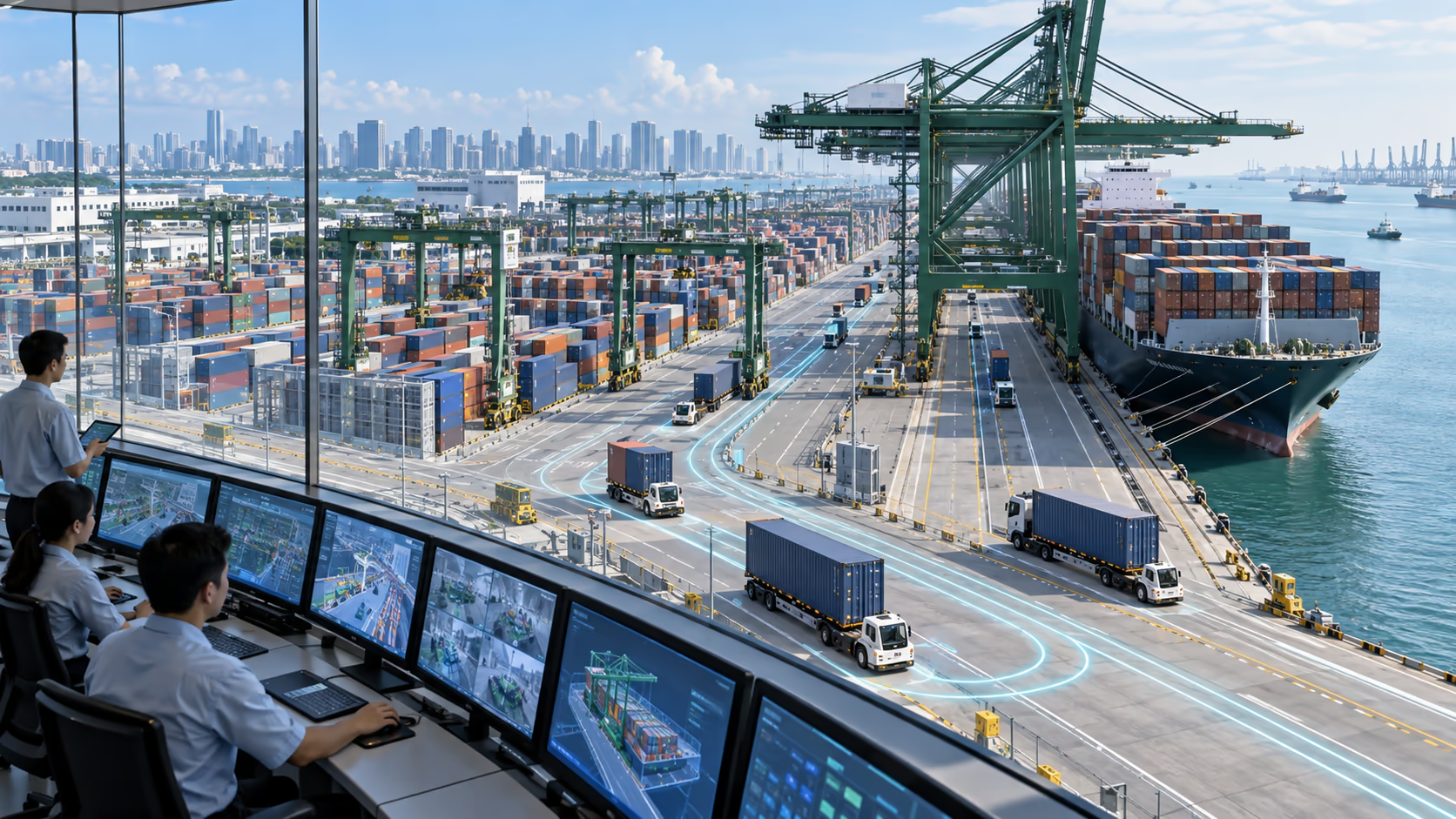
The movement of a single shipping container involves dozens of parties: exporters, trucking companies, freight forwarders, customs brokers, ocean carriers, and terminal operators. For too long, each of these entities operated in a data silo, communicating via email, PDFs, and phone calls. This friction creates inefficiency and obscures visibility. In 2026, Singapore’s digital logistics startups are attacking this fragmentation head-on, offering API-first platforms that act as the “nervous system” for global trade.
The Rise of the Visibility Aggregator
The biggest pain point in logistics is the lack of clarity: “Where is my container right now?” Historically, finding out required a phone call to a forwarder, who called the shipping line, who checked the terminal.
Singapore has become the hub for Freight Visibility Platforms that solve this by stitching together data from multiple carriers and ports. These startups pull AIS (Automatic Identification System) data, integrate with carrier APIs, and tap into terminal gate data to provide a single pane of glass for the shipper.
The competitive advantage for Singapore-based firms is their neutrality. Unlike a startup backed by a specific shipping line (like Maersk’s Twill) or a trucking company, independent Singapore platforms can aggregate data from all parties. This neutrality is crucial in an industry where competitors hate sharing data with each other.
The War on the PDF
A major focus for these startups is the automation of document processing. The freight forwarding industry still runs on a mountain of unstructured data—commercial invoices, packing lists, and certificates of origin often arrive as scanned images.
Singapore startups are deploying specialized OCR (Optical Character Recognition) and Large Language Models (LLMs) specifically trained on shipping terminology. These tools can read a hundred different invoice formats, extract the HS codes, weights, and values, and push that data directly into the customs declaration systems. This eliminates manual data entry errors and speeds up the clearance process, which is critical for time-sensitive cargo like pharmaceuticals or electronics.
Connecting the Last Mile
The digitalization is also spilling onto the roads. With the construction of the Tuas Mega Port, the physical distance between the port and the city’s industrial estates has grown. This makes trucking efficiency vital.
Digital logistics startups are creating Trucking Marketplaces and Slot Booking Systems that act like the “Uber” of freight. These platforms connect importers with a verified pool of haulers. By integrating with the port’s terminal operating system, these platforms ensure that a truck only arrives when the container is ready for pickup. This reduces the idling time and increases the number of trips a single truck can make per day.
The Backbone: SGTraDex
Underpinning this private sector innovation is the government-backed Singapore Trade Data Exchange (SGTraDex) . This is a public-private partnership designed to be the “common data highway” for the entire supply chain ecosystem. It standardizes the data formats so that a small SME shipper can share data seamlessly with a global bank or a logistics giant.
By providing this trusted infrastructure, Singapore ensures that the digitalization is inclusive. It prevents the creation of “walled gardens” where the largest shipping companies control all the data. The success of Singapore’s maritime tech sector lies in this orchestration: creating the rails for startups to build on, ensuring that data flows as smoothly as the water in the harbor.