The Physical Foundation and Its Derivatives Superstructure
Singapore’s commodity story begins with a paradox: the city-state has no oil and gas reserves, yet it is a major trading hub for both. This status was built on location—straddling the Strait of Malacca—and on decades of deliberate policy support for shipping, financing, and risk management infrastructure. The Singapore International Ferrous Week 2026, which convenes the global iron ore and steel trading community, is emblematic of how physical trade gravity translates into derivatives market development.
The derivatives superstructure that has grown atop this physical foundation is now diversifying beyond ferrous metals. Energy futures, freight derivatives, and precious metals clearing are developing simultaneously, creating cross-market linkages that no single-product exchange can replicate.
Energy: LNG Futures and the Asian Pricing Question
Abaxx Exchange’s LNG futures contracts—Gulf of Mexico FOB and North Pacific Asia DAP—reached 180,742 contracts year-to-date as of June 2026, compared to 41,617 contracts traded in 2025. The May 2026 monthly volume of 41,453 contracts was equivalent to over 40 per cent of global JKM futures volume across other exchanges during the same month.
This growth reflects a structural shift in how Asian LNG is priced. Historically, Asian buyers relied on oil-linked contracts or JKM assessments that were not directly hedgeable through physically deliverable futures. Abaxx’s contracts, which are centrally cleared and physically deliverable, address this gap directly. For Singapore, hosting these contracts reinforces its role as the natural pricing and risk management center for Asian energy trade.
Freight: The Glue That Ties Global Trade Together
Tan Tee Yong of SGX described freight as “the glue that ties global trade together for seaborne movement”. Forward freight agreement hedging activity increased 22 per cent year on year, driven by geopolitical uncertainty and Panama Canal congestion that elevated freight price volatility. SGX’s listing of a handysize time charter contract on June 22, 2026, focused on the Atlantic market, represents a response to client demand for more granular hedging tools.
For commodity investors, freight derivatives provide a direct hedge against the transportation cost component that can constitute a significant percentage of delivered commodity prices. In a market where physical trading and derivatives trading are increasingly integrated, freight exposure is not ancillary—it is intrinsic to the commodity exposure itself.
Precious Metals: The Infrastructure Completion
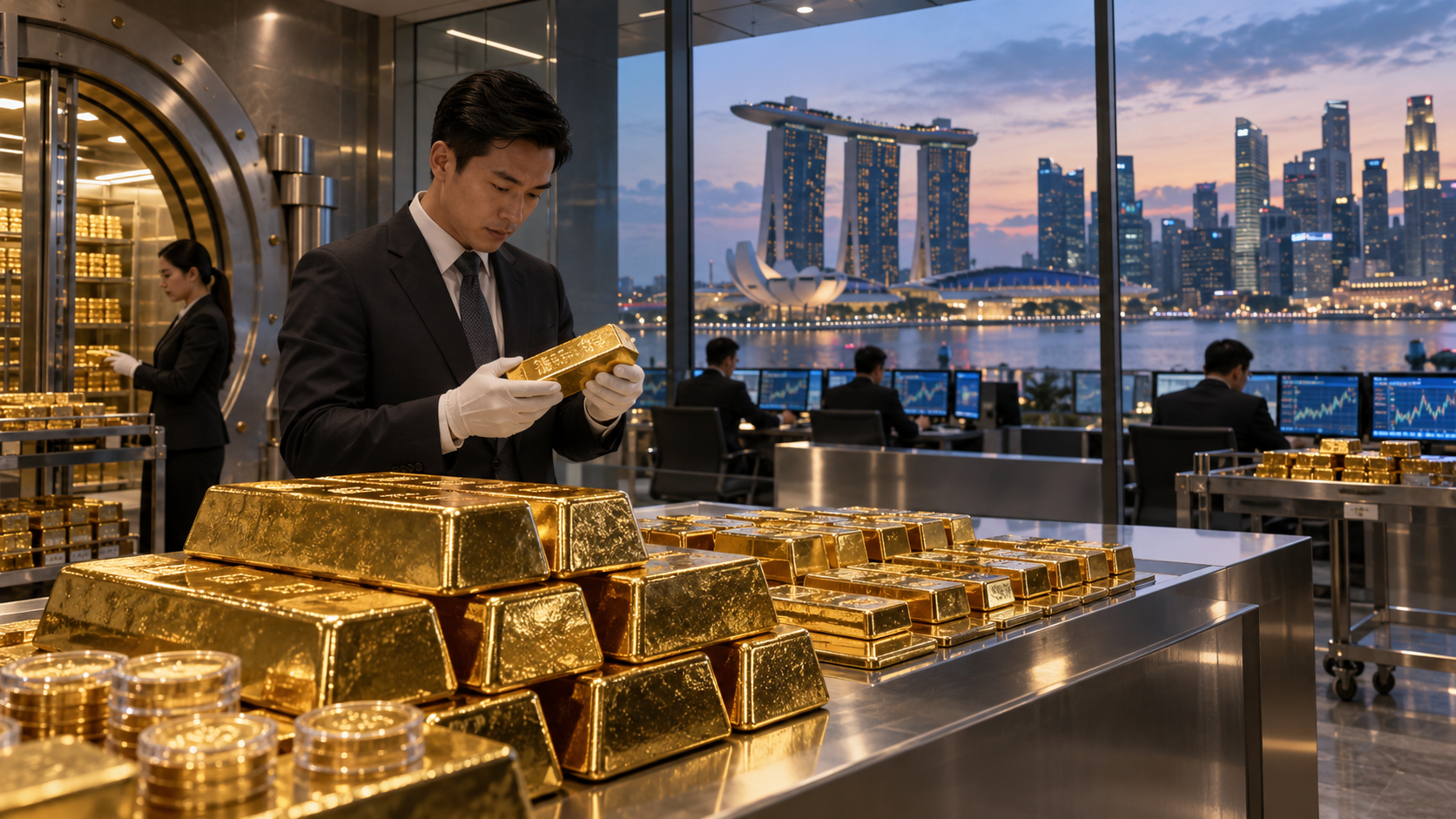
SGX’s establishment of an OTC gold clearing system for Loco Singapore by the end of 2026, with six bullion banks as clearing members, represents the final major infrastructure piece for Singapore’s precious metals ambitions. The clearing system will support both large bars and kilobars during Asian trading hours, addressing a long-standing operational gap that forced Asian gold traders to rely on London and New York clearing infrastructure.
Combined with MAS’s removal of the 5 per cent IPM cap from fund tax incentive schemes, Singapore is constructing a complete gold investment value chain: physical vaulting, OTC clearing, exchange-traded futures (under exploration), and regulated fund vehicles.
The Convergence Thesis
What distinguishes Singapore’s commodity hub strategy from that of other financial centers is the deliberate integration across asset classes. A gold trader clearing OTC transactions through SGX can also access iron ore derivatives for portfolio hedging, freight futures for logistics cost management, and LNG contracts for energy price exposure. This cross-asset efficiency—enabled by shared clearing infrastructure, margin offsetting, and a common regulatory framework—is the competitive advantage that no single-product venue can match.
For institutional investors, Singapore’s commodity ecosystem increasingly offers what London and New York have historically provided: depth, liquidity, and infrastructure. The difference is Asia-Pacific time zone execution, which matters for risk management in a region where the bulk of physical commodity demand originates.